Thinking of starting a landscaping business in South Carolina? Whether you’re offering lawn maintenance, tree work, hard-scape design, or full-service landscape contracting, it’s important to know what licences, permits, and certifications apply in the state. While South Carolina doesn’t require a statewide landscaping-contractor licence in many cases, you’ll still need to navigate local business licensing, state regulations if you apply pesticides, and, optionally, obtain horticultural certifications to boost credibility. This guide walks you step-by-step through what you need to do to launch your landscaping business legally and smartly in South Carolina.
Landscaping License Requirements in South Carolina
a. Landscaping Business
i. Landscape contractor license
In South Carolina, unlike some states, there is no general state-landscape-contractor license that covers all basic landscaping and lawn-care work. According to the state’s FAQs, lawn care, tree services, or landscaping maintenance are exempt from the state’s board licensing requirement for landscape architects.
Specifically, the South Carolina Board of Landscape Architectural Examiners notes: “I run landscaping, lawn care, or tree service. Do I need a license through the Board? A: No. These services are exempt… You need to contact the county where you do business for local business permits.”
This means that for typical lawn-care/maintenance/landscape installation work, you may not need a state contractor licence, but you’ll still need to comply with local business licensing and possibly other state rules (for example, pesticide application).
ii. No three levels of licenses determined by the size of the yard area
Because South Carolina doesn’t set landscape-contractor license levels by size (1 to 5,000 sq ft; 5,001 to 15,000 sq ft; over 15,001 sq ft) like your Arkansas model, this part does not directly apply here. If you were hoping for tiered license levels based on property size, you should note: South Carolina’s licensing model is simpler for many services, though you must check local municipality/county requirements, as they may have tiers or permits for heavy equipment, pesticide use, or tree removal.
iii. Subcontractors who work under a licensed landscaping contractor are exempt from licensing requirements
Since the state doesn’t require a state-landscaping-contractor license for general maintenance, this item doesn’t apply in the same way in South Carolina. But if you are working under another contractor who holds required certifications (e.g., pesticide applicator certification), you may benefit from using their license.
iv. Relevant link
Local business license information is available on the Local Business License- South Carolina Business One Stop. It is the state’s portal emphasizing that business licenses are issued locally by county/municipality.
b. Pest control
If your landscaping business will include pesticide or herbicide applications (common for turf maintenance, ornamental pest control, and weed control), you’ll need to navigate the state requirements for commercial applicators. While South Carolina’s specific pesticide-licensing requirements were not detailed fully in the sources found, nationwide guides indicate that states that do not require a general landscaper license typically still require a Commercial Pesticide Applicator license if you apply restricted-use chemicals.
Therefore, here are the key points you should keep in your mind:
- You will likely need to obtain a Commercial Pesticide Applicator License from the relevant South Carolina agency (likely the state’s agriculture department).
- That license will usually require passing a core exam + category exam, following safety meetings, and renewing periodically.
- Ensure you check with the South Carolina Department of Pesticide Regulation (or equivalent) for exact forms, fees, and continuing education.
Even if you do not apply pesticides and only do general maintenance, you should document that you are not applying restricted chemicals to avoid liability.
c. Nursery dealer
If your landscaping business includes selling plants or operating a nursery, you may need a Nursery Dealer License. For example, the state’s guidance for landscaping, lawn care, or tree services notes certain persons (arborist, gardener) may be exempt under certain definitions.
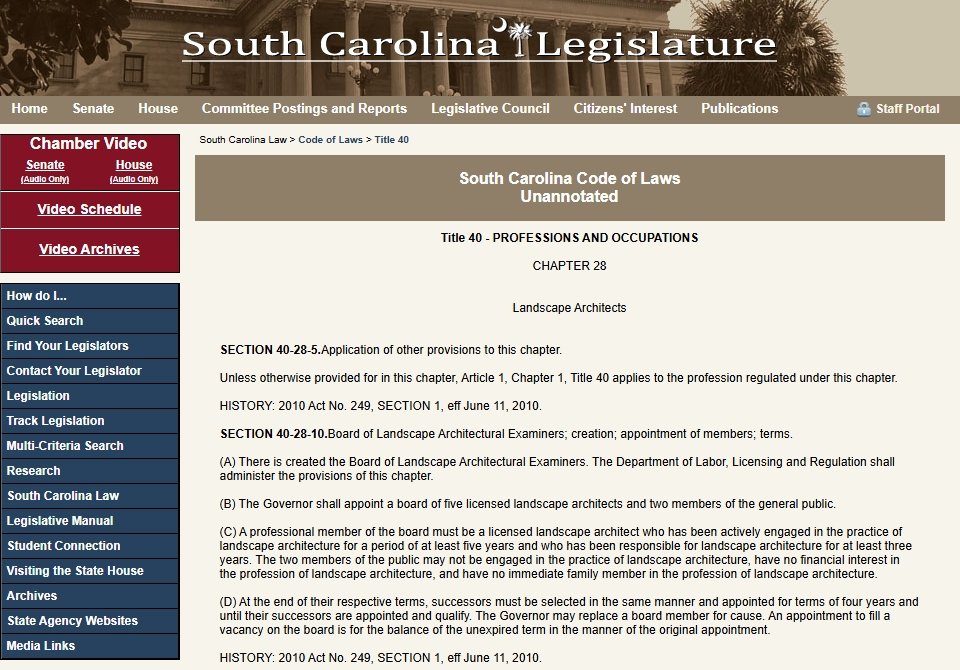
Visit the official site of South Carolina Code of Laws Unannotated for clearing your doubts about the licenses.

You should contact the South Carolina Department of Agriculture (Plant Industries Division) for details on nursery-dealer licences, requirements for plant sales, inspections, etc.
d. Other requirements
i. Business registration
In South Carolina, there is no statewide “business license” for all businesses; instead, business licenses are local (county/municipality). As SCBOS stated: “Business licenses are issued locally by the county or municipality where your business is operating. South Carolina does not have a statewide business license.”
Here are the things you must do:
- Check your county/municipality where you plan to operate – e.g., the city of Greenville, South Carolina, requires business licences each year.
- Determine whether your business is physically located inside city limits or just travelling across the county (some counties may require the license only if you maintain a fixed place of business). For example, forum discussion: “You do not need a business license for lawn services in SC unless you are going to collect sales tax or have employees.”
You can follow the link of Licensing Requirements in South Carolina for more clarity.
- Complete the application, pay the required fee, and renew annually.
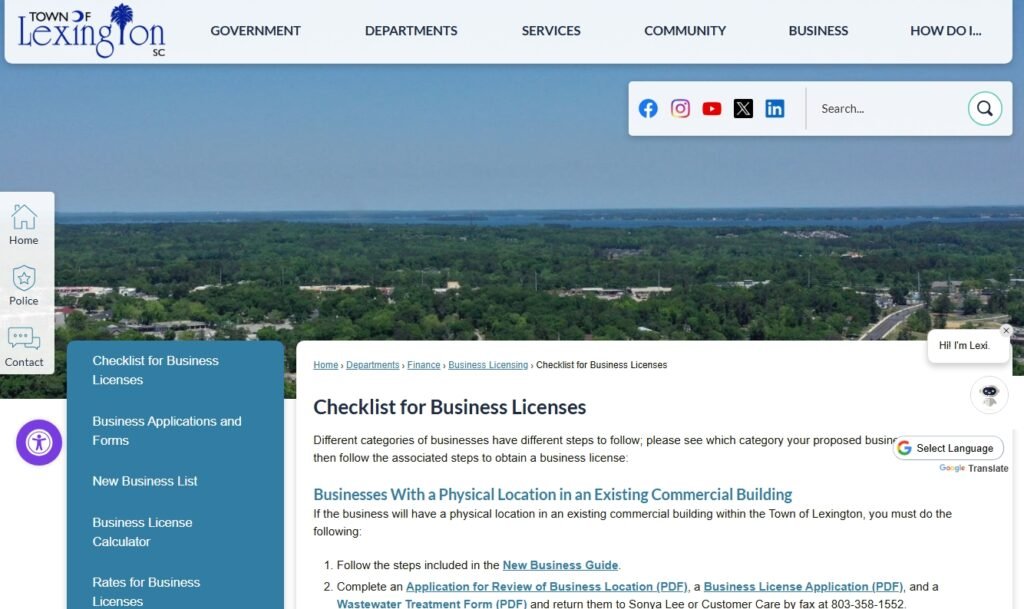
Here’s the Checklist for Business Licenses you must follow.
ii. Insurance
Although state law may not mandate specific public liability insurance amounts for general landscaping services in South Carolina, best business practice strongly recommends:
- General liability insurance (bodily injury/property damage)
- Workers’ compensation insurance if you have employees
- Commercial auto insurance if you operate vehicles
Even if not required by law for maintenance work, having insurance helps protect your business and improves credibility with clients. (Many national guides emphasise this even where not state-mandated.)
iii. Surety bond
South Carolina does not appear to require a mandatory surety bond for general landscaping-contractor work (given that the state does not license that category at the state level). However, if you undertake work that triggers a contractor license or perform pesticide application, you may find bonding required under that specific license category. Always check local and state regulations.
iv. Business registration as an entity
You should register your business entity (LLC, corporation, partnership) with the South Carolina Secretary of State if you intend to organize as anything other than a sole proprietorship. Ensure you obtain an EIN (if employees) and comply with IRS and state tax requirements.
Landscaping Association in South Carolina
Joining a trade association can boost credibility, provide networking and continuing-education opportunities. In South Carolina, you might consider programs like the South Carolina Landscape Contractors Association (if present) or the SCCLP certification with Clemson University, which offers horticultural training and professional development.
Using certifications such as the South Carolina Certified Landscape Professional enhances your business profile and client trust.
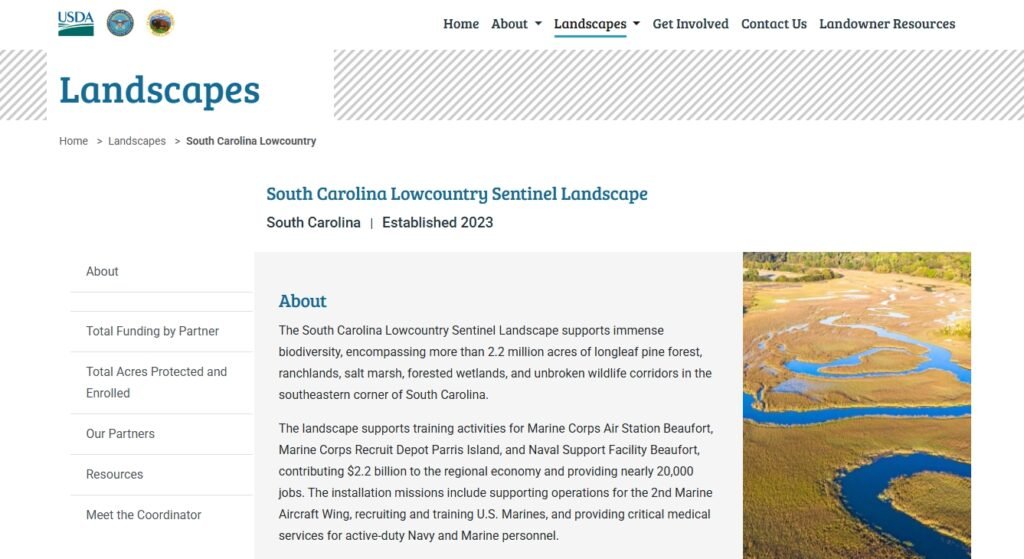
Visit the official site of South Carolina Lowcountry Sentinel Landscapes for more information regarding landscaping associations in South Carolina.
Summary: How to Start Your Landscaping Business in South Carolina
Starting your landscaping business in South Carolina involves these key steps:
- Choose your business entity and register with the Secretary of State (if applicable).
- Determine your county/municipality business license requirements via SCBOS and apply locally.
- If you apply pesticides, obtain the commercial applicator license from the state’s regulatory agriculture/pesticide authority.
- If you sell plants or operate a nursery, register as a nursery dealer with the Department of Agriculture.
- Obtain business insurance (general liability, workers’ compensation, auto) and consider a surety bond if required under a specialised permit.
- Join a professional association or complete a certification like the SCCLP to enhance your credentials.
- Maintain compliance: renew local business licenses annually (many run May 1 to April 30), stay up to date on pesticide rules, keep records of employees/contractors, and handle sales tax if applicable.