Starting a landscaping business in Tennessee can be a rewarding venture, especially with the state’s growing residential developments, commercial properties, and demand for sustainable outdoor spaces. However, before offering services, landscapers must understand Tennessee’s licensing, certification, and rules. These vary depending on the type of work required, the use of pesticides, the sale of plants, and the scale of projects handled. This guide outlines the essential licenses, permits, insurance requirements, and official resources required to operate a landscaping business legally in Tennessee.
a. Landscaping Business in Tennessee
i. Landscape Contractor License
In Tennessee, a landscape contractor license is required when landscaping work involves construction-related activities or exceeds certain monetary thresholds. Landscaping services such as grading, retaining walls, irrigation systems, hardscaping, and large-scale installations may fall under the Tennessee Board for Licensing Contractors. A contractor license is typically required when a single project exceeds $25,000, including labor and materials.
Smaller projects under this limit may not require a contractor license, but still must comply with local regulations.
Applications are submitted through the Tennessee Department of Commerce & Insurance (TDCI), and applicants may need to pass trade and business law exams.
ii. License Classification Based on Project Scope
Unlike some states that classify licenses by area size, Tennessee classifies contractors based on project value and trade type:
Projects under $25,000
- No state contractor license required.
- Local business permits may still apply.
Projects between $25,000 and $100,000
- Contractor license required
- Financial statements and an exam may be needed.
Projects exceeding $100,000
- Full contractor license with higher monetary limits.
- Audited financial statements may be required.
Visit the official website of Tennessee Board for Licensing Contractors for more licensing related information.
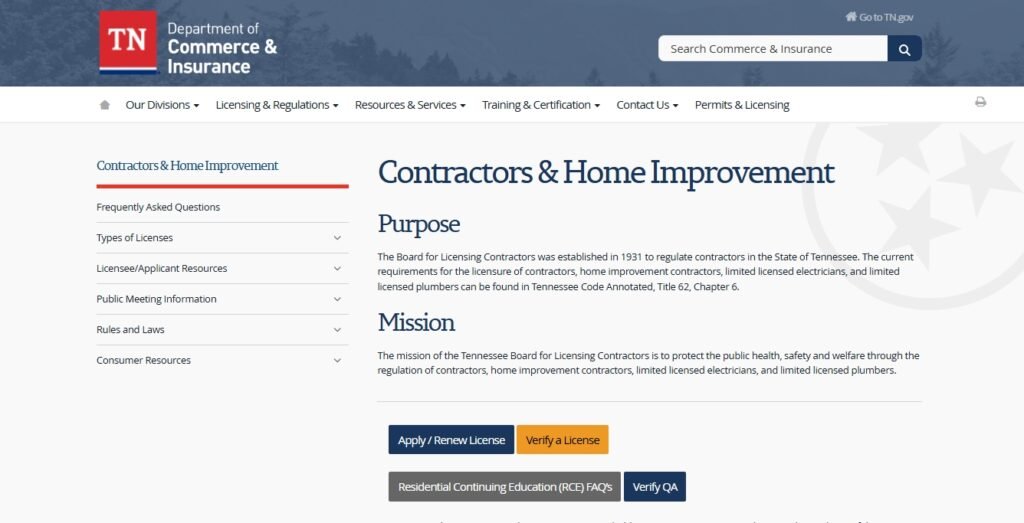
Each license is issued with a monetary limit, which determines the maximum value of projects a contractor can legally perform.
iii. Subcontractor Exemptions
Subcontractors working under a properly licensed Tennessee contractor are generally exempted from holding their own contractor license, provided:
- The primary contractor holds a valid license.
- The subcontractor does not independently contract with the property owner.
However, subcontractors must still comply with labor laws, insurance requirements, and tax registration.
b. Pest Control and Pesticide Application
i. Commercial Pesticide Applicator License;
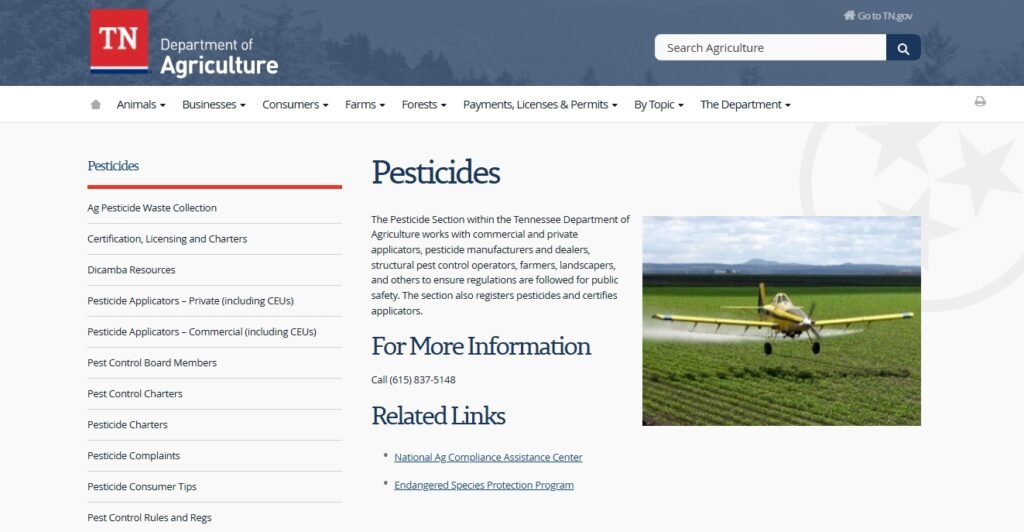
If your landscaping business includes weed control, insect treatment, or chemical application, Tennessee law requires a Commercial Pesticide Applicator License issued by the Tennessee Department of Agriculture (TDA).
Requirements include:
- Passing a core exam and a category-specific exam
- Completing pesticide safety and environmental protection training
- Renewing the license periodically with continuing education credits
- Only licensed applicators may apply restricted-use pesticides in commercial landscaping settings.
ii. Pesticide Safety Compliance
Licensed applicators must adhere to certain rules and regulations:
- They must follow state and federal pesticide regulations.
- They must maintain application records.
- They must attend mandatory pesticide safety meetings when required.
Failure to comply can result in fines, license suspension, or revocation.
Visit the official site of the Tennessee Department of Agriculture for more pesticide related information.
c. Nursery Dealer and Plant Sales Licensing
i. Nursery Dealer License
Landscaping businesses that sell plants, shrubs, trees, or sod must obtain a Nursery Dealer License from the Tennessee Department of Agriculture.
This license ensures:
- Plants sold are free from pests and diseases.
- Compliance with inspection and labeling standards
- Annual inspections of nursery stock may be conducted by the state.
ii. Nurseryman License
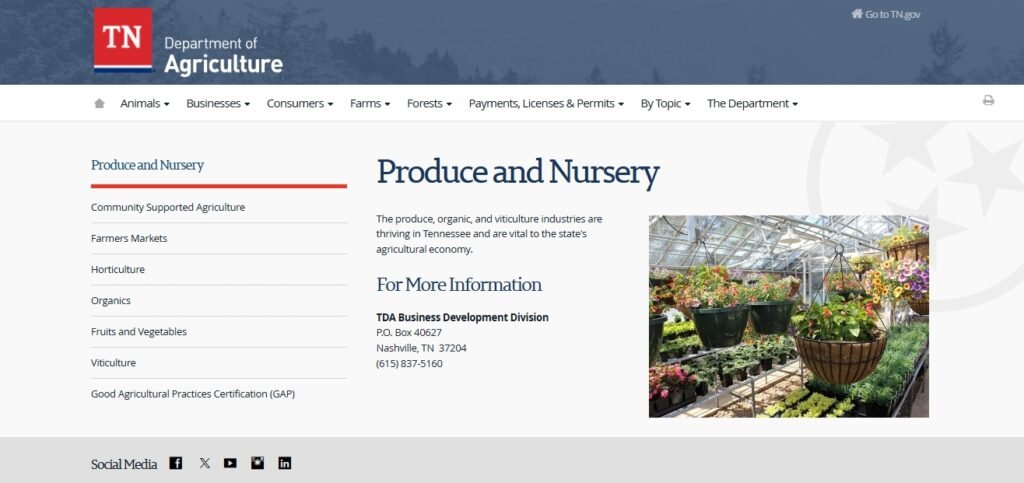
Businesses that grow plants for sale, rather than reselling, must apply for a Nurseryman License. This applies to landscaping companies that maintain their own greenhouses or growing yards.
Visit Produce and Nursery on the official site of the Tennessee Department of Agriculture for more information.
d. Other Mandatory Requirements
i. Surety Bond
Certain contractor classifications in Tennessee may require a surety bond, particularly for licensed contractors handling higher-value projects. The bond protects clients against incomplete or non-compliant work. Bond amounts vary depending on license type and monetary limit.
ii. Insurance Requirements
Landscaping businesses in Tennessee are expected to carry appropriate insurance coverage, including:
- Public Liability Insurance.
- $100,000 bodily injury coverage per occurrence.
- $50,000 property damage coverage per occurrence.
- $5,000 medical payment coverage.
Additional coverage, such as workers’ compensation insurance, is mandatory if the business employs workers.
iii. Business Registration
All landscaping businesses must be legally registered with the Tennessee Secretary of State.
Business registration includes:
- Choosing a business structure (sole proprietorship, LLC, corporation)
- Filing formation documents
- Obtaining an Employer Identification Number (EIN)
- Registering for state taxes if applicable
- Local city or county business licenses may also be required.
Visit Tennessee Secretary of State for more information regarding business registration.

Landscaping Associations in Tennessee
Joining a professional association can provide education, networking, and industry credibility.
Key Landscaping organizations in Tennessee include:
Tennessee Nursery & Landscape Association (TNLA)
It offers certification programs, legislative advocacy, and business resources.
Visit the official site of the Tennessee Nursery & Landscape Association for more information.
National Association of Landscape Professionals (NALP)
It provides national certifications, safety training, and business development tools.
Visit the official site of the National Association of Landscape Professionals for more information.
Membership in such associations helps landscaping businesses stay competitive and informed.