South Dakota’s open landscapes and growing suburban areas make it an ideal location for a thriving landscaping business. Whether you plan to handle lawn maintenance, tree care, pest control, or sell nursery plants, the state requires specific licenses depending on the services you offer. Understanding these requirements early helps you avoid penalties and ensures your business runs smoothly. Below is a detailed breakdown of the essential licenses, fees, applications, and government resources you’ll need to start a landscaping business in South Dakota.
Licensing Requirements for Landscaping Business
a. Landscaping Contractor License
South Dakota may not use the exact terminology “Landscape Contractor License,” but landscaping businesses often fall under general contracting, pesticide control, or nursery regulations, depending on the scope of work.
i. Landscape Contractor Licensing Structure
If your landscaping services involve construction-based tasks such as building retaining walls, irrigation system installation, or hardscaping, you may need a Contractor License depending on the county or city where you operate. Many municipalities in South Dakota require contractors to register, show insurance, and pay a licensing fee before operating.

You may visit the official site to know more about the South Dakota Construction License
ii. Area-Based License Levels (modeled on your structure)
Although South Dakota does not categorize landscaping licenses strictly by lot size, here is a simplified adaptation aligned with your structure:
- 1 to 5,000 sq. ft. – For small residential lawn care and minor landscaping.
- 5,001 to 15,000 sq. ft. – For medium-sized yards, small commercial lots, and more extensive landscaping work.
- 15,001 sq. ft. and above – For large commercial properties, estates, or industrial landscaping.
These levels help determine the extent of compliance, equipment needs, and potential insurance requirements.
iii. Subcontractors
If you hire subcontractors, such as irrigation specialists or arborists, they may operate under your umbrella contract without needing separate licenses, provided they are licensed in their own trade field. For example, certified pesticide applicators or nursery professionals must hold individual credentials, even when subcontracting.
b. Pest Control Licensing
If your landscaping services include weed control, insect treatment, or chemical sprays, you must obtain a Commercial Applicator License from the South Dakota Department of Agriculture & Natural Resources (DANR).
i. Commercial Applicator License Requirements
To get this license, you must:
1. Pass the Core Exam and a Category Exam
Landscapers usually qualify under categories such as:
- Ornamental & Turf
- Right-of-Way
- Aquatic
- Public Health
Sales Tax License (if selling plants or materials).

Visit South Dakota Department of Revenue for more information regarding taxes.
2. Attend Pesticide Safety Training Sessions
DANR conducts mandatory training covering chemical handling, environmental impact, mixing ratios, PPE, and safe disposal.
You can explore categories, study materials, and application forms on the official website of the South Dakota Department of Agriculture and Natural Resources
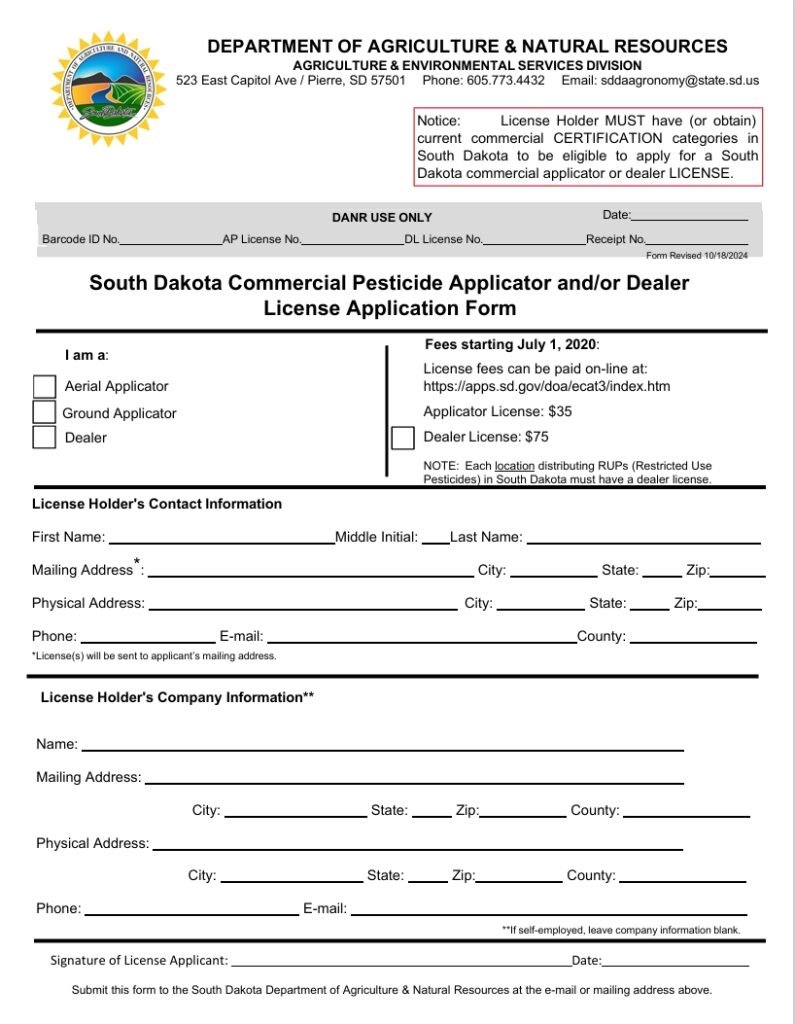
South Dakota Commercial Pesticide Applicator and/or Dealer License Application Form
c. Nursery Dealer Requirements
If your business sells plants, shrubs, trees, or nursery stock, South Dakota requires you to register as either a Nursery Dealer or Nurseryman.
i. Nursery Dealer License
A Nursery Dealer License is required for businesses purchasing nursery stock for resale.
Key details include:
- Application forms
- Fee payment (varies depending on business size and stock volume)
- Plant health certification
- Potential inspection by the State Plant Health Division
ii. Nurseryman License
If you grow, cultivate, or propagate your own plants, you need a Nurseryman License.
This usually requires:
- Annual inspection
- Compliance with state plant health standards
- Proper labeling and disease-free stock
d. Other Requirements
i. Surety Bond
Although the specific amount varies by city or county, landscaping businesses in South Dakota often must hold a surety bond (commonly around $1,000 or more) for contractor registration or pesticide application.
ii. Insurance
Insurance coverage is essential for protecting your business against liability. Below is the typical coverage recommended for landscapers in South Dakota:
1. Public Liability Insurance
- $100,000 bodily injury coverage per occurrence
- $50,000 property damage coverage per occurrence
- $5,000 medical payment coverage
Some municipalities may require higher coverage, especially if you bid on government or commercial projects.
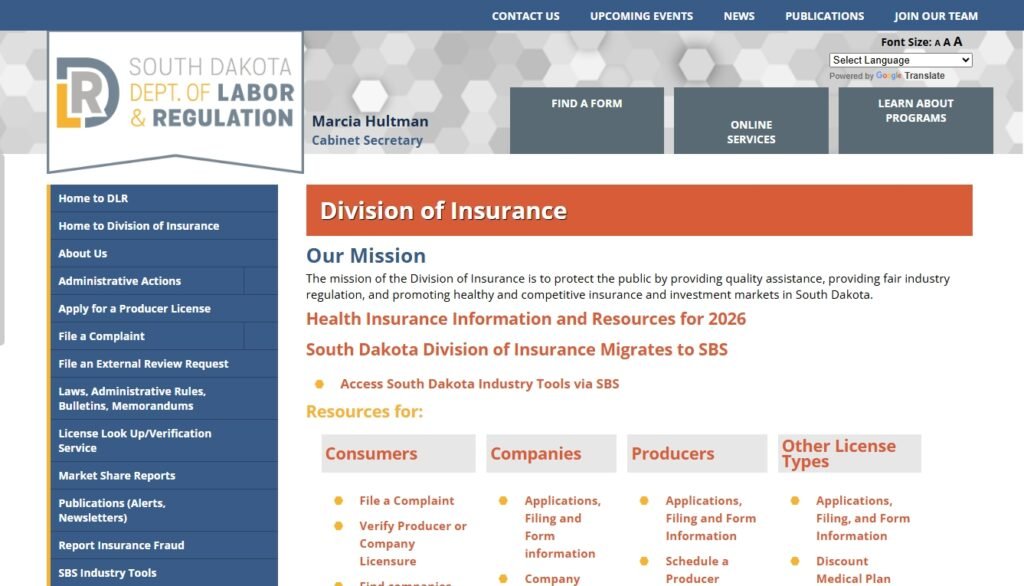
To know more about the division of insurance, do visit the South Dakota Department of Labor & Regulation Division of Insurance. And
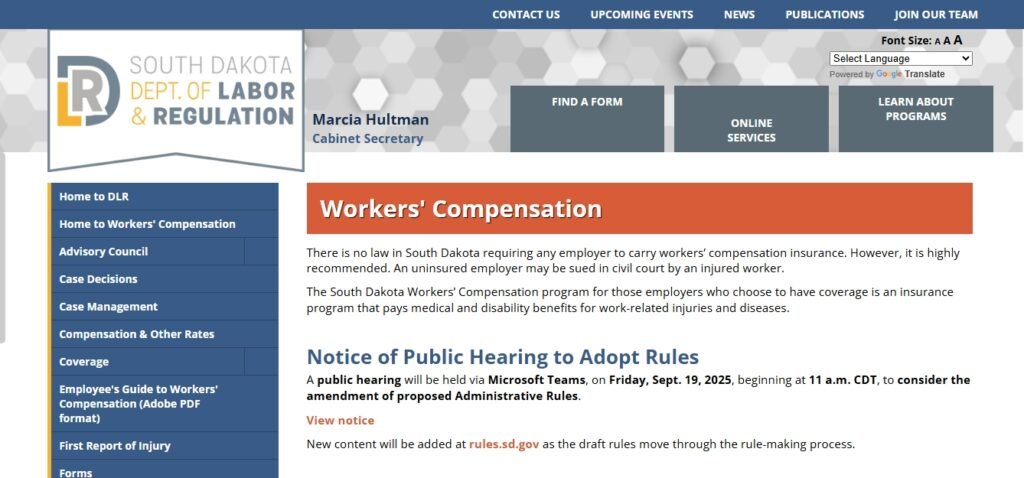
You may visit the official site of South Dakota Department of Labor and Regulations to know more about the Workers’ Compensation.
iii. Business Registration
To officially operate, register your business with the South Dakota Secretary of State.
Steps include:
- Choosing a business structure (Sole Proprietorship, LLC, etc.)
- Filing online via South Dakota Secretary of State – Business Services Portal
- Paying registration fees
- Obtaining your Employer Identification Number (EIN)
Visit the link to follow the step-by-step guide for Licensing and Registering Your Business.
Landscaping Associations in South Dakota
Being part of a professional network can boost your credibility and offer learning opportunities. Some helpful associations include:
South Dakota Nursery & Landscape Association (SDNLA)
The South Dakota Nursery and Landscape Association was formed to better educate association members and their staff while also promoting horticulture, certified nursery professionals, and the Green Industry in South Dakota.
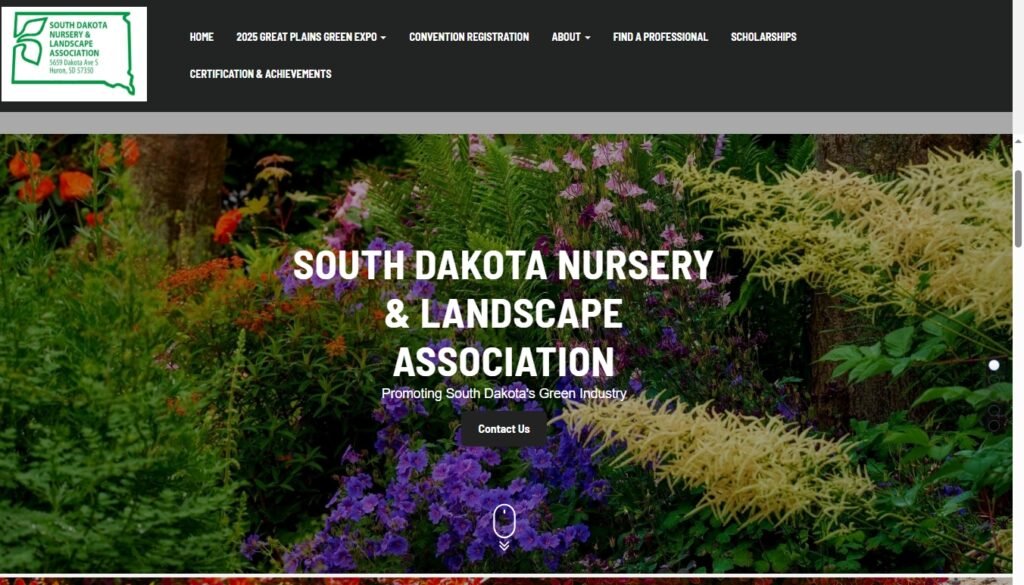
Visit the official site to know more about South Dakota Nursery & Landscape Association
South Dakota State Horticulture Society
The South Dakota Horticulture Society was originally organized in December 1884 as the Horticultural and Forestry Association and adopted its current name in January 1890. Its primary mission is to advance horticulture and gardening practices in South Dakota, fostering education and engagement among both professionals and enthusiasts.

Visit the official site to know more about South Dakota State Horticultural Society. – Biodiversity Heritage Library
These organizations provide training workshops, landscape expos, certification assistance, news updates, and connections with suppliers and growers.