Thinking of starting a landscaping business in the Keystone State? Whether you’re dreaming of transforming yards with lush plantings, crafting elegant hardscapes, or simply mowing lawns from spring to fall, it pays to know the rules.
In Pennsylvania, while you don’t need a one-size-fits-all landscaping license, you do need to follow the right registrations, certifications, and local rules depending on the services you offer.
Let’s walk through what you’ll need, how to get it, and how to make sure you launch your business on solid legal ground.
Requirements for Landscaping Businesses in Pennsylvania
Here’s how things break down depending on what you do and which specific service you offer.
a. Landscaping contractor registration (or “home improvement” registration)
In Pennsylvania, if your landscaping business does more than basic maintenance—like installing patios, walls, or drainage—you may fall under the Home Improvement Consumer Protection Act (HICPA). You must then register as a home improvement contractor.
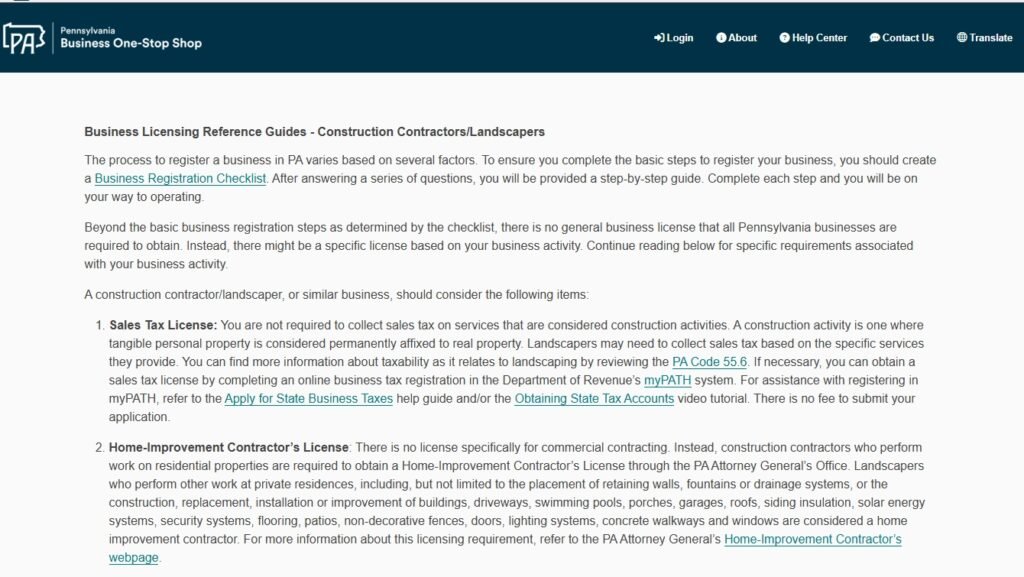
Follow this Business Licensing Reference Guides – Construction Contractors/Landscapers for getting more familiar with all the requirements.
Any contractor who performs at least US$5,000 worth of home improvements in a calendar year must register with the Pennsylvania Office of the Attorney General.
“Home improvement” includes many landscaping-adjacent services: retaining walls, fountains, drainage systems, hardscapes, etc.
Exemptions apply: If your work is limited solely to services under the Plant Pest Act (for example, purely planting/maintenance), then you may not have to register.
Note: Registration is valid for two years and must be renewed.
The registration number must appear in your advertising, contract, estimate, etc.
You may follow Landscape Architects | Department of State | Commonwealth of Pennsylvania for license renewal and other important information.
Follow here to know How to Get Your Pennsylvania Contractor License– A comprehensive guide.
In short: if you’re doing just basic landscaping (mowing, planting, mulching), you may not need registration — but if you build or improve structures, walls, patios, drainage, you do.
b. Pesticide applicator / chemical services
If your landscaping business involves applying herbicides, pesticides, or other regulated chemicals, then the rules change.
In Pennsylvania, while there is no general state license for all landscapers, you do need a Commercial Pesticide Applicator license from the Pennsylvania Department of Agriculture if you apply restricted-use or regulated pesticides.
Here’s something you need-
You’ll need to pass a core exam plus one or more category exams (depending on the type of chemical use).
This means you’ll need to build that into your business plan if you intend to offer fertilising, pest control, or chemical treatment as part of landscaping.
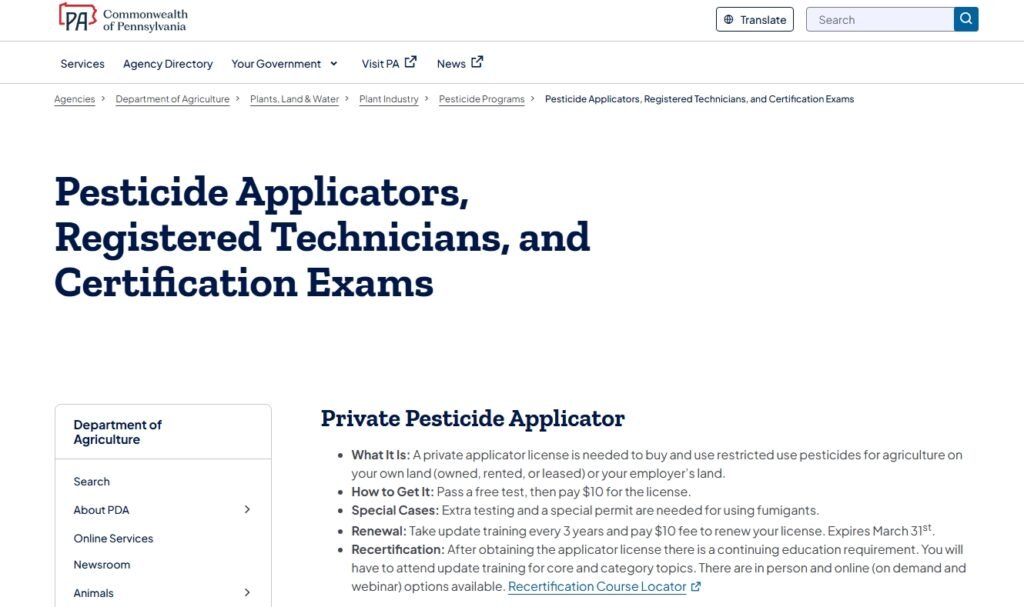
Follow the link to get the detailed information about Pesticide Applicators, Registered Technicians, and Certification Exams.
c. Nursery dealer / plant-industry license
If your landscaping business includes plant sales, dealing in nursery stock, or you operate a nursery along with installation services, then you might need to be licensed as a Nursery Dealer. While this is less common for pure landscaping contractors, it is something to be aware of if you handle plants at a wholesale/retail level. (E.g., in other states, nursery dealer licences exist; you should check with Pennsylvania’s agriculture department for specifics.)
d. Additional requirements include Registration, Bonding, and Insurance
Beyond those specific licences/registrations, there are general business requirements you must meet:
Business registration
Even though Pennsylvania may not require a specific “landscaping license” at the state level for basic work, you must still register your business entity (LLC, corporation, sole proprietor) with the Pennsylvania Department of State.

Visit the official site of Pennsylvania Department of State for more information.
Insurance
If you’re doing home-improvement work, liability insurance is essential. For example, industry guidance says: for landscape contractors working over US $5,000/year in home‐improvement work, you should have liability insurance of at least US $50,000.
Local/municipal licensing
Some cities or counties may require specific contractor registration/license even if the state doesn’t. For example, in Philadelphia, contractor licensing and insurance requirements apply.
Contractor safety/training requirements
Especially if your work includes construction/hardscape elements, you may need OSHA training, a supervisor with OSHA-30 certification, etc.
Landscaping association in Pennsylvania
If you’re building a landscaping business in Pennsylvania, consider joining the Pennsylvania Landscape & Nursery Association (PLNA). The Pennsylvania Landscape & Nursery Association is the leading trade association that represents the $6.8 billion green industry of Pennsylvania. It improves air quality, water quality, economic value and human health.
Visit the official site of Pennsylvania Landscape & Nursery Association to get more information regarding the same.
Industry bodies like this offer training and certification (such as the “Pennsylvania Certified Horticulturist”), keep you updated on regulatory changes, facilitate networking, and help raise your business’s credibility.
Lawn Care Association of Pennsylvania (LCAP)
It is an organisation representing professional lawn care industries in the Commonwealth of Pennsylvania.
Visit the official site of LCAP – Lawn Care of PA to know more about the same.
Note: Here’s how you can identify a Qualified Landscape Contractor.
Putting it all together: How to launch your landscaping business
Here’s a practical step-by-step flow:
- Decide what services you’ll offer: lawn maintenance (mowing, planting), full landscaping (hardscape, patios), chemical treatments, retail nursery, or design work.
- Choose your business structure: sole proprietor, LLC, corporation; register with the Department of State.
- If your work qualifies as “home improvement” (over $5,000 annually in certain work), then register with the Attorney General as a Home Improvement Contractor.
- If you’ll apply pesticides/chemicals, get your commercial pesticide applicator licence: pass exams, choose categories.
- If you’ll offer design services (landscape architecture), then check for licensure under the State Board of Landscape Architects.
- Set up your insurance: liability insurance, workers’ compensation if you have employees, etc.
- Check municipal/local requirements: your county or city may require registration or licensing beyond the state level.
- Use your association networks (like PLNA) for training, certification, and business best practices.
- Ensure your contracts, advertising, and documentation include all required registration numbers (e.g., your PAHIC# for home improvement contractors) and disclose to clients the rights they have.
- Stay compliant and update: renewal deadlines, continuing education for certain licences, and keep up to date with legal/regulatory changes.
By following these steps and understanding which category your services fall into, you’ll be better equipped to launch your landscaping business in Pennsylvania legally, professionally, and with confidence.